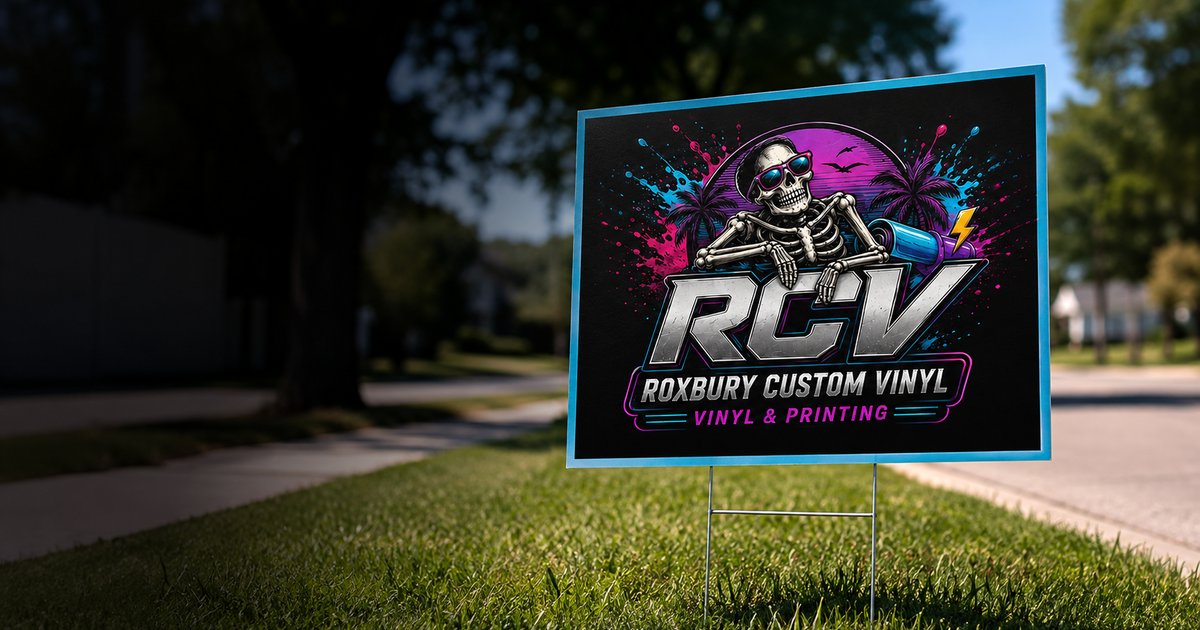
Yard signs seem simple until you're the one designing one and realize most of what's on the road doesn't actually get read. A driver has maybe two seconds to register a sign.
Less text wins. Pick the one thing you most want someone to remember and make that the largest thing on the sign.
Contrast matters more than color choice. Dark text on a light background reads faster than two similar tones next to each other.
Size and placement decide visibility. A well-designed sign placed too low or blocked by landscaping won't get seen no matter how good it looks up close.
Planning a yard sign campaign? Tell us the goal and we'll design something built for a two-second glance.
Roadside readability
Design for Seconds, Not Minutes
A driver or pedestrian may have only a brief glance. The sign should communicate one message: a business name, event, candidate, sale, direction, or call to action. Extra detail competes with the information that matters most.
Create a Clear Visual Hierarchy
Make the primary message largest, supporting information smaller, and optional details smallest. Use bold letterforms and strong contrast. Leave open space around the message; filling every corner does not make a sign more valuable. It makes the content harder to separate at speed.
Choose Wording That Can Be Remembered
Use a short name, brief action, readable web address, or simple phone number. Long service lists and paragraphs belong on the landing page reached after the sign has done its job. QR codes may help nearby pedestrians, but they should not be the only information and should never encourage unsafe scanning by drivers.
Plan Placement Before Finalizing the Design
Measure the site and observe approach direction, traffic speed, competing signs, parked vehicles, landscaping, shadows, snow accumulation, and likely viewing distance. Keep critical content away from stakes and edges. A sign designed for a lawn beside a slow walkway is different from one intended for a busy road.
Use Materials Appropriate to the Campaign
Expected lifespan, weather, wind exposure, mounting, and reuse influence substrate and construction. Temporary event signs and longer seasonal campaigns may require different solutions. Inspect outdoor signs regularly and remove or repair damaged pieces.
Follow Property and Local Placement Rules
Obtain the property owner's permission and confirm municipal, county, state, development, or association requirements as applicable. Never install a sign where it blocks traffic visibility, interferes with utilities, creates a pedestrian hazard, or trespasses in a right-of-way.
What to send RCV: exact wording, purpose, location photo, viewing distance, expected lifespan, quantity, colors, logo files, installation plan, and deadline. We can then design for the real environment.
Test the Design Before Ordering
View the proof small or step away from the screen. If the main message cannot be identified immediately, simplify it. Roxbury Custom Vinyl combines artwork preparation with practical local context so the sign is built to be noticed—not merely to contain information.
Common Yard-Sign Mistakes
- Using thin script or condensed lettering that disappears at distance.
- Placing low-contrast colors together because they look attractive on a bright screen.
- Including multiple phone numbers, social handles, QR codes, service lists, and disclaimers at equal size.
- Allowing stakes, frames, grass, or snow to cover the most important line.
- Designing without seeing a photograph of the actual placement.
- Leaving expired, damaged, or leaning signs in place.
Coordinate a Multi-Sign Campaign
Use the same colors, logo, wording hierarchy, and contact destination throughout the campaign. Directional signs can simplify to arrows and a short event name, while primary signs carry the complete message. Consistency lets repeated sightings reinforce recognition instead of appearing to advertise unrelated organizations.
Track locations and removal
Maintain a list of approved placements, installation dates, responsible contacts, and removal deadlines. This is particularly important for event, political, real-estate, and seasonal signs. Timely removal protects the property owner, community appearance, and the organization’s reputation.
Connect the sign to the next step
The web page, phone answer, event entrance, or sales offer should match the wording and visual identity on the sign. A clear roadside message loses value if the customer reaches outdated information or cannot identify the same business online.