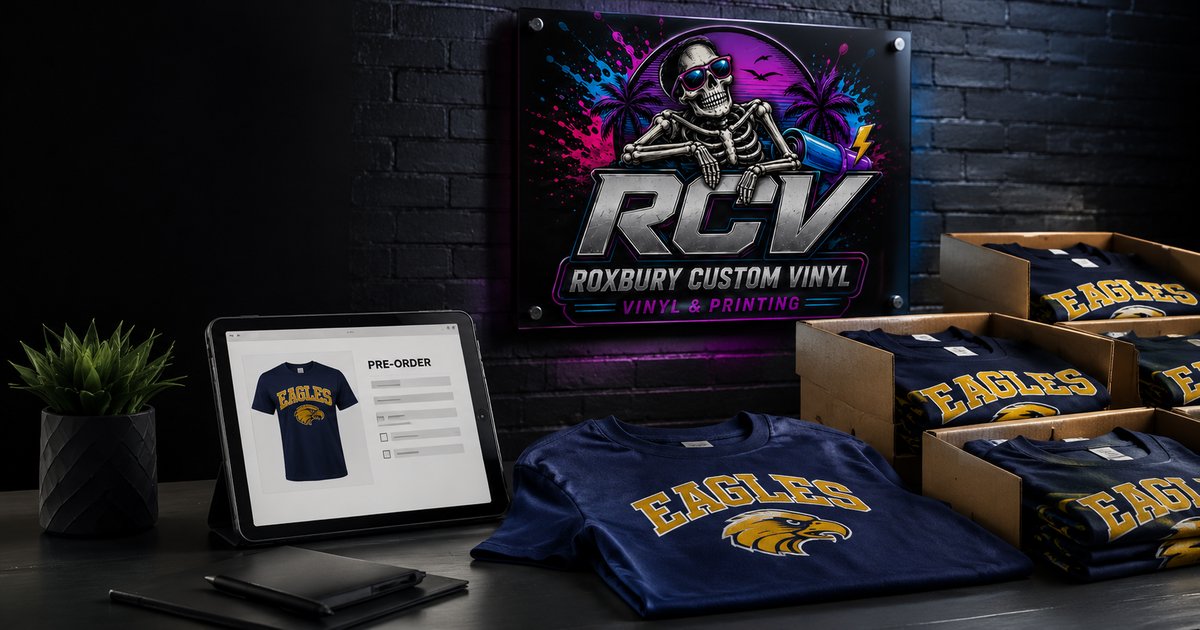
There are basically two ways booster clubs and school groups run a spirit wear fundraiser.
Pre-sale model
You collect orders and payment first, then place one order sized exactly to what was sold. Zero unsold inventory, no upfront cash risk — but takes longer to fulfill.
Bulk order model
You order a set quantity upfront, based on an estimate. Product is available immediately for last-minute buyers — but real risk of unsold inventory.
A hybrid a lot of groups land on: a short pre-sale window to gauge demand, followed by a small bulk order of the most popular size/style for walk-up sales.
Trying to decide which model fits? Tell us your timeline and how much upfront risk your group is comfortable with.
Fundraiser planning
Compare the Two Models Beyond Unit Price
A pre-sale collects orders and payment before production. It reduces inventory risk, supports a broad size range, and works well for personalized or premium items. Its tradeoff is delayed fulfillment: buyers must understand that production begins after the ordering window closes.
A bulk order is produced in advance. It supports immediate sales at games, events, school nights, or community gatherings, but the organization must forecast demand, fund the order, store inventory, and accept the possibility of leftovers.
When a Pre-Sale Is Usually Stronger
- The group has limited cash or storage.
- This is the first campaign and demand is uncertain.
- The product line includes many sizes or personalized details.
- Volunteers can communicate and enforce a firm closing date.
- The organization wants to minimize unsold custom apparel.
When a Bulk Order Can Work Better
- Past sales provide dependable size and quantity data.
- Supporters expect to purchase and leave with an item immediately.
- The group has secure storage and organized inventory controls.
- The product is a proven basic with year-round demand.
- The available budget can absorb slower-selling inventory.
Use a Hybrid Model When It Solves a Real Problem
Pre-sell the broad size range, premium garments, and personalized pieces, then stock a modest quantity of popular basics for events. The hybrid approach should simplify the fundraiser—not create two confusing ordering systems. Publish which items are pre-sale, which are immediately available, and when each will be distributed.
Build a Timeline Before Advertising
Set the final distribution date, then work backward through production, proof approval, final order submission, sales close, and launch. Include time for sorting and unclaimed items. The event date and the date organizers need apparel in hand should be recorded separately.
RCV shop tip: Choose one primary contact and one approved product list. Conflicting artwork, quantities, and deadline changes from multiple volunteers are a larger risk than either sales model.
Track the Result for the Next Campaign
Record sales by garment, color, and size; late requests; unsold stock; payment fees; volunteer hours; and final proceeds. Keep the approved artwork and production specifications. The next fundraiser can then use real local demand instead of another guess.
Roxbury Custom Vinyl helps teams, schools, clubs, and community groups select the model that matches their audience, budget, timeline, and volunteer capacity. That planning support is what makes RCV a local fundraising partner rather than only a shirt supplier.
Financial Controls for Either Model
Record each order, payment, fee, printer invoice, refund, complimentary item, and remaining unit. Use the organization’s approved payment and banking procedures. If volunteers collect cash, establish who counts it, when it is deposited, and how the sale is reconciled. Confirm tax and reporting obligations with the organization’s qualified adviser.
Communicate fulfillment terms clearly
State whether products are custom, the size-selection responsibility, ordering deadline, estimated completion window, pickup method, and whom buyers should contact. Do not promise an exact delivery date until the production schedule is confirmed. If a supplier substitutes or discontinues a garment, obtain approval before changing the order.
Protect artwork permissions
Confirm authorization to use school names, team marks, sponsor logos, league artwork, and other protected material before taking payments. RCV can prepare approved artwork for production but cannot grant rights owned by another organization.
Keep the catalog intentionally small
Each added garment, color, design, print location, and personalization option increases the chance of errors. Add a choice only when it serves a clear audience need. A focused sale is easier to promote, fulfill, and repeat.