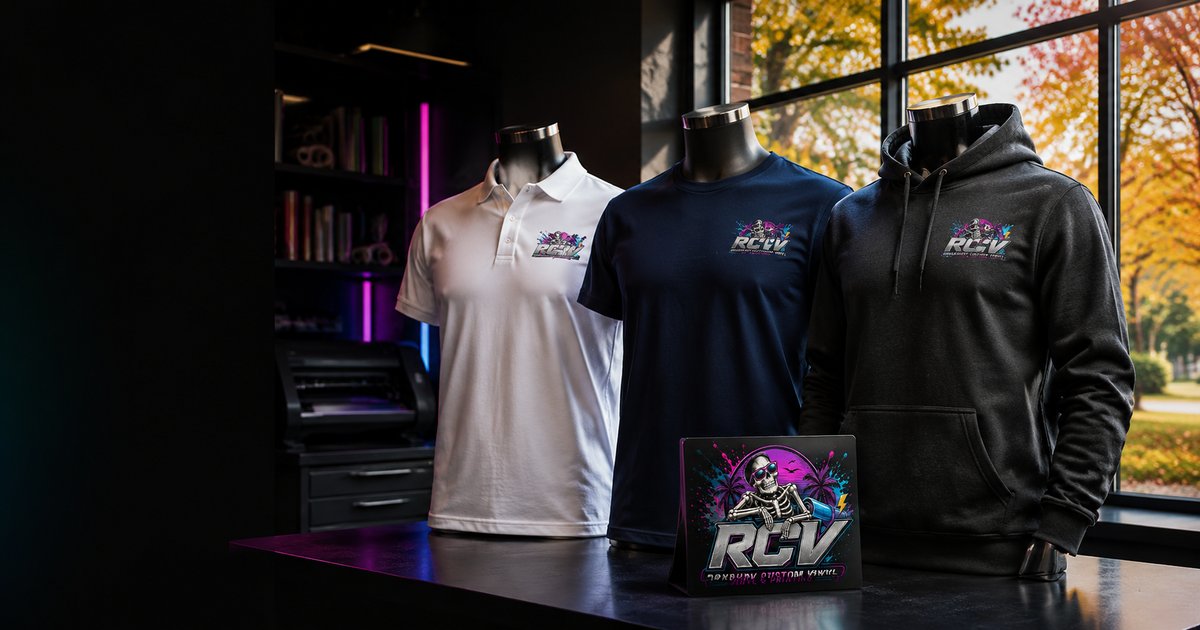
We get some version of this question year-round: "should we order polos or t-shirts?" The honest answer depends less on preference and more on when and where the uniform gets worn.
Polos
Polos read as more professional. If your staff interacts with customers face-to-face — retail, sales, front desk — a polo signals a step up from a plain tee without requiring a full uniform budget. They also layer well under a jacket in cooler months.
T-shirts
T-shirts are the workhorse option. Cheaper, faster to produce, and fine for anything from a staff event to a warehouse crew to a youth sports team. If budget or turnaround time matters more than polish, this is usually the right call.
Hoodies
Hoodies solve a seasonal problem, not an everyday one. They're a smart add-on for fall/winter events, sideline wear for parents and coaches, or a "level up" item for a fundraiser — but ordering hoodies as a summer uniform staple usually means they sit in a drawer for half the year.
A practical approach a lot of local businesses use: t-shirts for the bulk of the team, polos for anyone client-facing, and hoodies as a seasonal or fundraising add-on rather than the everyday uniform.
Not sure what mix makes sense for your crew? Tell us your team size and use case and we'll help you land on a combination that doesn't waste budget on gear that won't get worn.
Seasonal uniform planning
The most practical uniform program may include more than one garment. A consistent logo and controlled color palette can connect tees for warm work, polos for customer-facing situations, and hoodies or outer layers for cooler conditions. Employees gain comfort without the team looking mismatched.
When T-Shirts Are the Best Foundation
T-shirts are versatile, approachable, and available across many fabrics, weights, fits, colors, and price points. They work well for crews, events, retail teams, schools, and casual service businesses. Choose fabric based on heat, movement, laundering, and the desired appearance—not only on the lowest unit price.
When Polos Add the Right Structure
A collar can create a more formal impression for sales, management, office, hospitality, and client-facing roles. Consider snag resistance, moisture management, collar construction, and whether the employee will tuck the shirt. Left-chest artwork needs to fit the available area and remain readable at a smaller size.
When Hoodies and Layers Earn Their Place
Hoodies are useful for outdoor work, cool buildings, travel, and seasonal spirit wear. Pullover and zip styles create different decoration areas; pockets, zippers, seams, and hoods affect placement. A sweatshirt should coordinate with the core shirt rather than introducing an unrelated logo treatment.
Plan for Reorders and Employee Roles
Document approved garment colors, artwork, print size, and placement. Decide whether every role wears the same item or whether a coordinated hierarchy—tees for field staff, polos for supervisors, for example—better serves the business. Confirm that the chosen styles cover the needed size range and are likely to remain available.
RCV shop tip: Tell us the hottest, coldest, messiest, and most customer-facing parts of the job. Those real conditions reveal which garment mix will actually be worn.
Roxbury Custom Vinyl helps local teams and businesses create a uniform family rather than a one-season collection of unrelated shirts. We connect garment selection, artwork, and decoration method so each layer represents the same professional brand.
Decoration Placement Across Different Garments
A full-back design that works on a tee may need adjustment around a hoodie seam or hood. A left-chest logo must account for polo plackets and pockets. Zip hoodies split the center front, making left-chest or back placement more practical than artwork crossing the zipper. Each garment should be proofed for its actual construction.
Keep employee comfort in the decision
Uniforms only advertise the business when employees willingly wear them. Consider indoor temperature, outdoor exposure, movement, layering, fabric sensitivity, and laundering access. Gather feedback after the first season, but use one decision-maker to maintain brand consistency.
Budget by expected use
Spend where the garment delivers value. Everyday staff tees may justify several pieces per person, while a polished polo or seasonal hoodie may be issued in smaller quantities. Plan replacements and new-hire additions so the original choice remains affordable after launch.
RCV can price a coordinated package and explain where upgrading the blank will be noticeable—and where a dependable standard option will perform just as well.