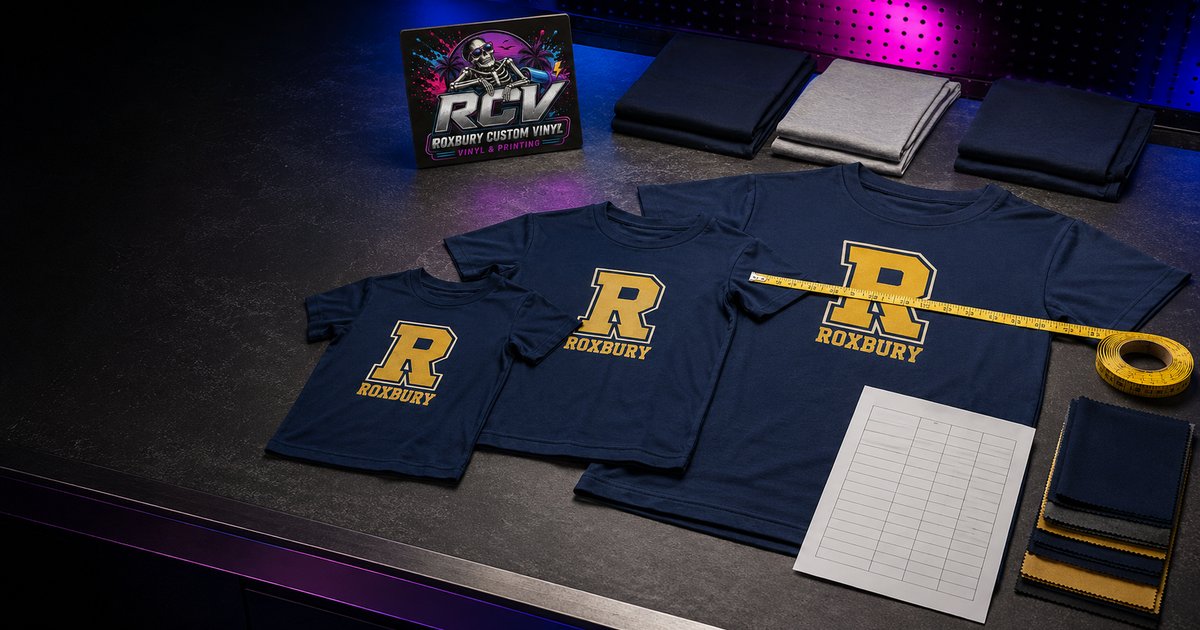
If you've ever ordered a batch of youth shirts and ended up with half the roster swimming in fabric and the other half unable to get theirs on, you're not alone. Youth sizing trips up a lot of first-time booster club organizers, and it's an easy problem to avoid once you know what to watch for.
Youth sizes don't map directly to age. A youth medium isn't automatically "right for an 8-year-old" — it varies by brand, and kids of the same age can span two or three sizes depending on build. Going by actual measurements, not age, avoids most of the guesswork.
Collect sizes individually, not by estimate. A simple size-collection form sent to parents — even just a text thread with "what size does your kid wear" — beats guessing based on the coach's mental roster.
Order a few extras in the middle sizes. Youth medium and large tend to cover the widest range of a typical roster.
Ask about a size chart before you collect anything. Different garment brands run differently — we'll send you the actual chart for whatever blank you're ordering.
Running a youth order this season? We'll walk you through sizing before you collect a single form, so you're not fixing mistakes after the fact.
Sizing without guesswork
Use Measurements, Not Age Alone
Two children of the same age can need very different sizes, and youth size names vary among manufacturers. Compare the child's well-fitting shirt with the garment-specific size chart. Measure width across the chest with the shirt laid flat and length from the high shoulder area to the bottom hem, using the chart's instructions.
Understand Youth-to-Adult Transitions
The largest youth size and smallest adult size are not guaranteed to be equivalent. Adult garments may be longer, wider through the body, and cut differently at the shoulders and sleeves. Check actual measurements and consider the child’s preferred fit, especially for hoodies and performance apparel.
Plan for Growth Carefully
Buying one size larger can be reasonable for a full season, but dramatically oversized garments may be uncomfortable and can affect print proportion. For sports or activities, loose fabric may also be inappropriate around equipment. Balance useful growing room with safe, practical fit.
Order Samples or Run a Fit Check
For team and school programs, a brief sizing session can prevent many exchanges. Use undecorated samples when practical, label each clearly, and record the selected sizes immediately. Do not infer sizes from visual appearance or allow one family's preference to set the rule for everyone.
Account for Decoration and Garment Range
A design sized for an adult large may overwhelm a youth extra-small. Mixed youth and adult orders may need proportional print dimensions. The printer should also confirm that the chosen color and style are available across the full size range, or recommend coordinated alternatives.
Organizer checklist: choose one garment, share its exact chart, collect size selections in writing, identify youth versus adult sizes clearly, set a deadline, and have each family confirm its entry before submitting the order.
Roxbury Custom Vinyl helps local teams and school groups select coordinated garments, interpret size ranges, and plan artwork for mixed-size orders. That careful preparation reduces costly surprises after personalized apparel has already been produced.
Handle Personalized Youth Orders With Extra Care
Names and numbers should be supplied in a typed list linked to the confirmed garment size. Ask families to review spelling, capitalization, and number before the order closes. Personalized custom items generally cannot be reassigned easily when a size or spelling was submitted incorrectly.
Avoid ambiguous size labels
Write Youth Small, Youth Medium, Adult Small, and so on. Abbreviations such as “S” or “XL” are incomplete when youth and adult garments appear in the same order. Include the exact style name when more than one garment is offered.
Respect privacy while collecting information
Collect only information needed to fulfill the order, restrict access to the organizer and printer, and avoid publicly posting lists of children's full names and sizes. Use the organization’s approved systems and remove working lists when they are no longer required.
Good sizing administration may feel less exciting than choosing artwork, but it is the part that protects families, volunteers, and the fundraising proceeds after production begins.