By Scott M., Owner, Roxbury Custom Vinyl · Published August 14, 2026
Printing Advice
DTF Wash & Care Instructions
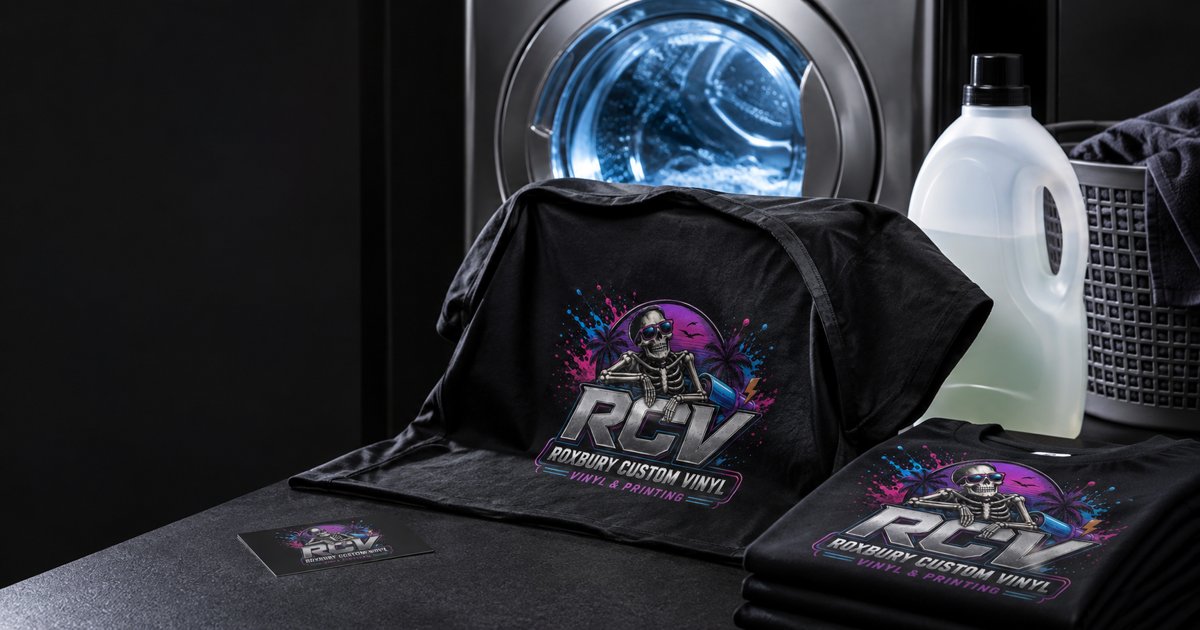
Quick Answer
DTF transfers hold up best when washed inside-out in cold water, air-dried or tumble-dried on low, and never ironed directly on the print. Following these simple steps will keep your design looking sharp for years.
Washing
Drying
What to Avoid
Why This Matters
Why We Print It Right the First Time
Care and troubleshooting
What Actually Causes Premature Print Wear?
A DTF design is printed on film, coated with adhesive, cured, and heat-applied to the garment. Its performance depends on the transfer, the fabric, and controlled application of time, temperature, and pressure. Laundry care matters because repeated high heat, aggressive chemicals, abrasion, and stretching can speed the aging of both the garment and its decoration.
Separate normal aging from a production problem
Every frequently worn garment eventually changes. Fabric may pill, color may soften, and highly stretched areas can show wear first. Sudden edge lifting, widespread separation, or adhesive problems after very limited use are different. If that occurs, photograph the entire shirt, the care label, and close views of the affected area before attempting a repair.
Wash comparable garments together
Turning shirts inside out is useful, but load selection also matters. Lightweight tees repeatedly rubbing against jeans, metal zippers, hook-and-loop closures, or work gear receive more abrasion. Avoid overfilling the washer, which prevents garments from moving and rinsing properly.
Use low heat realistically
Air-drying is gentlest. When that is impractical, tumble dry on low and remove garments promptly. Do not place a hot iron directly on the design. If the surrounding fabric needs pressing, turn the garment inside out and follow its care label while protecting the decorated area.
Good Care Begins With the Right Garment and Artwork
A very large solid print can feel and flex differently from artwork designed with intentional open space. Heat-sensitive fabrics, coatings, water-resistant finishes, seams, pockets, and polyester dyes can also affect production. Roxbury Custom Vinyl reviews those variables before printing and recommends DTF only when it fits the garment and intended use.
That front-end judgment is why ordering from a knowledgeable local shop matters. RCV is available after pickup, understands how the order was produced, and can evaluate a concern using the actual garment, artwork, and application process—not a generic customer-service script.
Watch
Frequently Asked Questions
Can I wash DTF-printed shirts with other laundry?
Yes, just follow the same cold-water, inside-out approach for the load.
Will the print crack over time?
Proper care (cold water, low heat) significantly reduces cracking risk over the life of the garment.
Can I dry clean a DTF-printed shirt?
We generally recommend standard washing over dry cleaning unless there's a specific reason — reach out if you're unsure about a specific garment.
Does this apply to vinyl prints too?
The same general principles (cold water, inside-out, avoid direct heat) apply well to vinyl prints as well.
More From the Blog
Ready to Get Started?
Veteran-owned · Serving customers within 50 miles of Roxbury, NJ · Ships nationwide when needed
Request a Free Quote