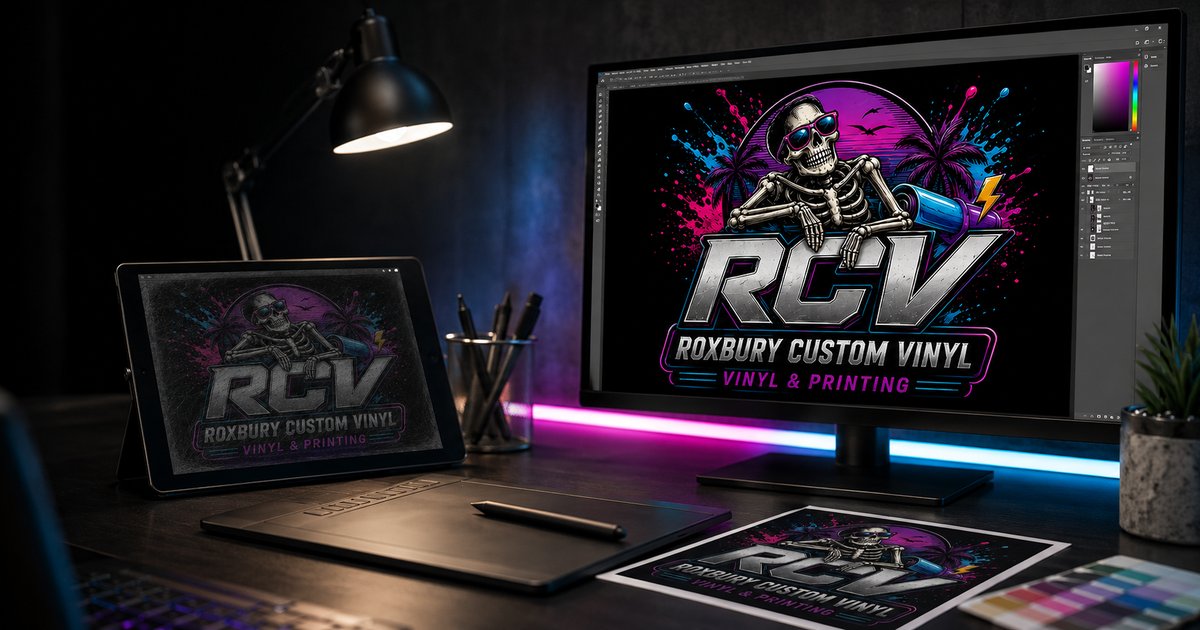
A lot of business owners come to us saying "I need a new logo" when what they actually need is a clean, usable version of the one they already have. It's worth figuring out which situation you're in before committing to a full redesign.
You probably just need a cleanup if: the logo still represents your business fine, but the only file you have is a blurry screenshot or an old business card scan, or it was designed years ago on a program that doesn't exist anymore.
You probably need an actual redesign if: the logo doesn't reflect what the business has become, or it hasn't been touched since the business started and everything else about the brand has changed.
A middle option a lot of businesses don't consider: a light refresh — same core concept and colors, cleaner execution.
Send us what you've got, even if it's a rough scan or an old business card photo. We'll tell you honestly whether it needs a rebuild or just a clean file.
Decision guide
Choose a Cleanup When the Identity Still Works
A logo cleanup preserves recognition while repairing the file. It may include redrawing rough edges, correcting spacing, aligning shapes, replacing a low-resolution image with a clean vector master, simplifying tiny details, and preparing dependable color and one-color versions. This is often the right answer when customers already recognize the mark and the real problem is inconsistent or unusable artwork.
Signs that a cleanup is enough
- The logo still reflects the business and audience.
- Customers recognize it and there is value in that familiarity.
- The main issues are blur, jagged edges, uneven spacing, poor small-size reproduction, or missing file formats.
- The logo works in some places but needs approved variations for shirts, signs, and social profiles.
Choose a Redesign When the Strategy Has Changed
A redesign is appropriate when the company name, services, audience, personality, or competitive position has materially changed. It may also be necessary when the existing concept cannot work in one color, cannot be simplified for small applications, closely resembles a competitor, or communicates the wrong level of professionalism.
A redesign should not be driven only by boredom. It should solve a defined business problem. Before changing a familiar identity, identify what must improve and which recognizable elements—color, symbol, initials, or overall character—are worth retaining.
Files You Should Receive at the End
A useful logo package normally includes scalable vector artwork, transparent PNG files, print and digital color references, full-color and one-color versions, and horizontal or stacked arrangements when needed. A screenshot, flattened social-media image, or tiny JPEG is not a complete logo system.
RCV shop tip: Test the logo at the smallest and largest sizes you actually use: a left-chest print, profile image, vehicle graphic, banner, or storefront sign. A good identity remains recognizable across that range.
Roxbury Custom Vinyl understands both artwork and production. We evaluate how the logo will behave on real garments and products, not just how it looks on a design screen. That prevents a beautiful concept from becoming an expensive production problem later.
Questions to Answer Before Approving Logo Work
Who must recognize the business? What should the logo communicate? Where will it appear most often? Which current elements have genuine recognition? What production problems have occurred? Which competitors use similar colors or symbols? What is the rollout budget for replacing old materials? These answers make the project strategic rather than purely decorative.
Do not judge only on a large screen
Review the mark in full color and one color, on light and dark backgrounds, and at realistic sizes. Fine text that looks impressive on a monitor may disappear on a small left-chest print. An intricate emblem may need a simplified companion mark. The purpose of testing is not to remove personality; it is to ensure the identity survives real use.
Plan the transition
For a redesign, list every place the old mark appears: apparel, signs, vehicles, forms, invoices, email signatures, social profiles, web pages, product labels, and saved templates. Establish a launch date and replace the most visible customer-facing uses first. A gradual but organized transition looks intentional; mixing versions indefinitely looks accidental.
RCV can connect the artwork decision directly to production planning, helping you understand what must be replaced immediately, what can wait, and which logo variations will work across the products you actually use.